
Key Takeaways
- Social interaction engages memory, attention, language, communication, and decision-making skills.
- Regular conversations and recurring plans give older adults opportunities to practice memory and recall in daily life.
- Games, music, creative programs, and volunteering combine social interaction with different forms of mental engagement.
- Phone calls and video chats can maintain social connections when regular in-person visits are difficult.
- Families can encourage connection through consistent routines based on an older loved one’s interests and preferences.
Why Social Connection Matters for a Sharper Mind
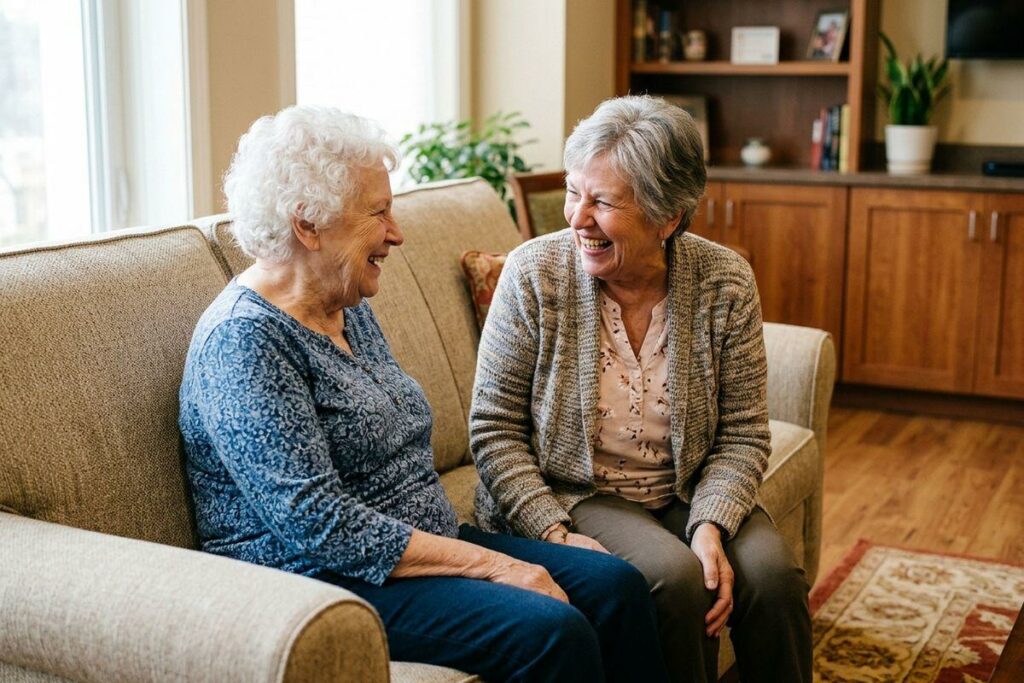
Social connection is an important part of healthy aging. Conversations, shared activities, and time spent with other people naturally require older adults to listen, respond, recall information, and stay engaged with what is happening around them. These everyday interactions can provide valuable mental stimulation while strengthening relationships with family, friends, and peers.
Regular social activity can benefit cognitive health for seniors by keeping the mind engaged through communication, attention, and participation. It can also support emotional well-being and provide a greater sense of connection to others. Social activity is one massive part of overall cognitive wellness, and even simple interactions can provide meaningful opportunities to older adults.
How Social Activity Supports Cognitive Health
Social interaction often engages several mental processes at the same time. A conversation, game, or group gathering can involve attention, memory, language, and decision-making while also providing companionship and a reason to participate.
Memory and Recall
Everyday conversations give older adults opportunities to recall names, stories, recent events, and details from previous discussions. Regular plans, such as a weekly card game or lunch with friends, can also involve remembering schedules and anticipating upcoming activities, keeping your loved one’s memory and recall involved in ordinary daily life.
Attention and Communication
Following a conversation requires listening to what someone says, interpreting it, and deciding how to respond. Games and group activities can add problem-solving, concentration, and decision-making to that process.
Mood and Social Connection
Having a familiar group, recurring activity, or regular visit can also give an older adult something to anticipate during the week. Even when simple, these positive social experiences can encourage continued participation in the people and activities that are meaningful to them.
Social Activities That Keep Older Adults Engaged
There is no single activity that works for everyone. The most sustainable options tend to reflect an older adult’s existing interests, abilities, personality, and preferred ways of spending time.
Games and Group Activities
Card games, board games, trivia, and discussion groups combine social interaction with different forms of mental engagement. Depending on the activity, participants might use memory, strategy, language, or problem-solving skills, which helps them subconsciously strengthen their brain.
Music and Creative Programs
Music, painting, crafts, and other creative programs give older adults opportunities to participate and express themselves alongside others. Someone might sing with a group, work on an art project, or even just talk about their favorite songs with friends.
Purposeful Activities and Volunteering
Writing cards, knitting items for donation, or participating in a community project can provide a clear purpose for getting together. These activities combine conversation and participation with the satisfaction of working toward a shared goal.
Staying Connected From a Distance
Phone calls and video chats can keep family members and friends involved when distance or busy schedules make regular visits difficult. A recurring weekly call can also create a familiar routine without requiring an elaborate plan.
How Families Can Support an Older Loved One’s Social Life
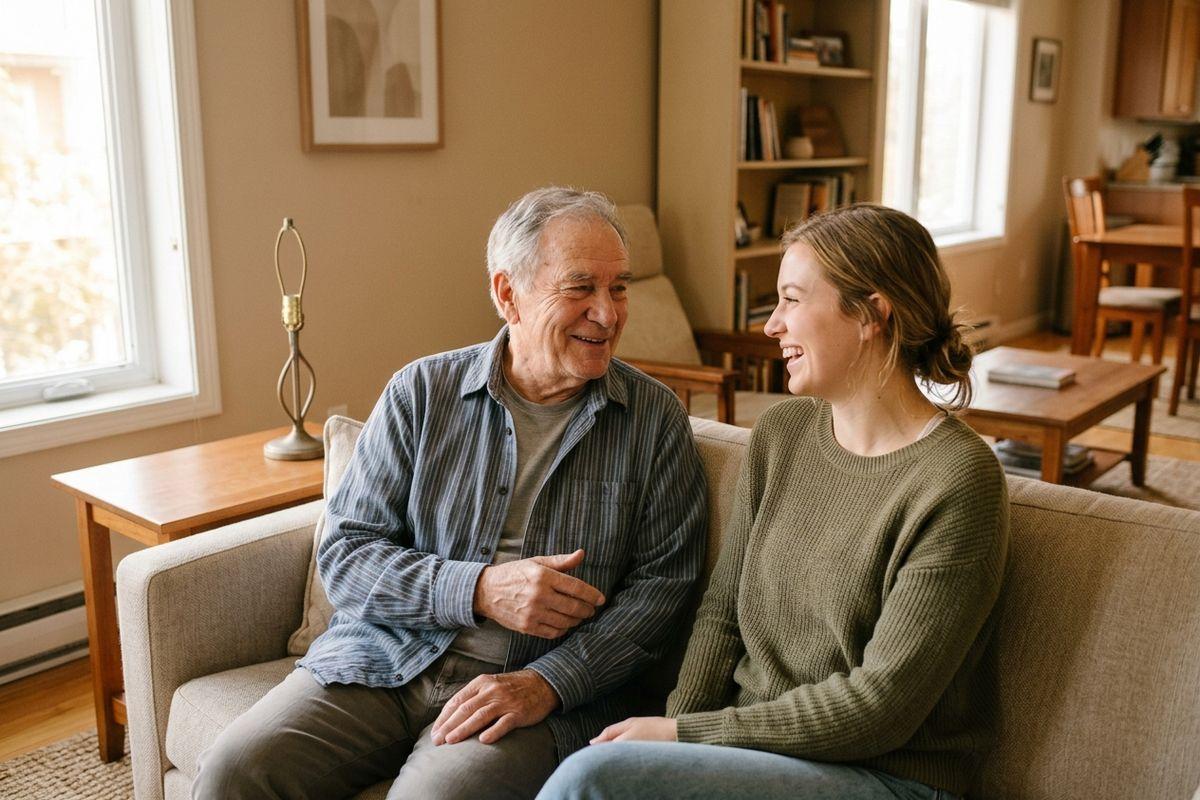
Supporting an older loved one’s social life does not require filling every day with plans. A few consistent opportunities built around what they already like to do can create a routine that feels comfortable rather than obligatory.
Families can:
- Set a regular time for phone calls, video chats, or visits.
- Suggest activities connected to existing hobbies and interests.
- Invite friends and other family members to participate.
- Look for recurring groups or programs that provide regular opportunities to connect.
- Ask what activities their loved one is interested in rather than choosing on their behalf.
Preferences can also change over time. Checking in about what feels interesting, comfortable, or worthwhile keeps the focus on meaningful participation rather than simply staying busy.
How Senior Living Creates More Opportunities for Connection
Finding regular opportunities to socialize can become more difficult when friends and family live farther away, or when transportation is limited. Senior living brings activities, neighbors, and shared spaces together in one community, which can make social interaction easier to incorporate into everyday routines.
Opportunities for social connection can include:
- Scheduled games, classes, and group programs
- Shared meals with neighbors
- Creative programs centered on music, art, or other interests
- Community celebrations and social gatherings
- Comfortable shared spaces for casual conversation
- Group outings and local events
These regular opportunities make it easier to connect with others without requiring every social interaction to be planned in advance.
Support an Active, Connected Lifestyle at Brooklyn Pointe
Social activity can support cognitive health by providing regular opportunities to communicate, pay attention, recall information, and participate with others. It can also provide companionship and a stronger sense of connection. The activities themselves do not need to be complicated; what matters is finding opportunities that fit an older adult’s interests and encourage continued engagement.
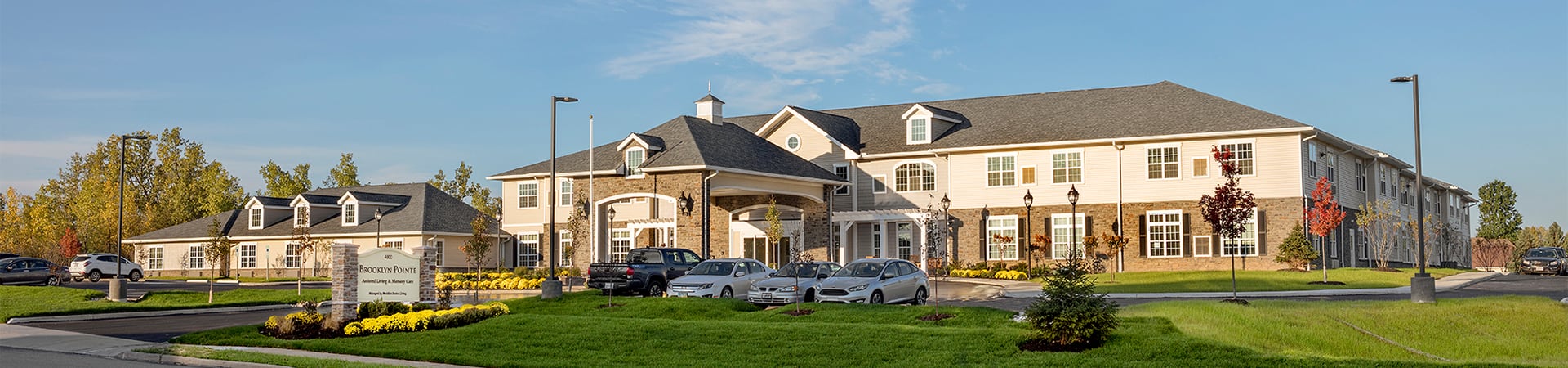
At Brooklyn Pointe Assisted Living and Memory Care, we’re proud to have built a welcoming community where everyone here can connect through shared spaces, programs, and everyday interactions. Families considering senior living can learn more about how community life can support an older loved one’s social and cognitive wellness. Schedule a tour with us today to learn more about our community and the opportunities we can offer your loved one!


