
Key Takeaways
- Memory care is a specialized form of assisted living for individuals with Alzheimer’s or other forms of dementia.
- Nursing homes provide 24-hour skilled medical care for people with complex health conditions.
- The main difference is the focus—memory care centers on cognitive support and lifestyle, while nursing homes center on medical treatment.
- Environments are distinct, with memory care offering a secure, residential setting and nursing homes having a more clinical structure.
As you begin to explore care for a family member, you’ll encounter many different terms. Two of the most common options you’ll see are memory care and nursing homes. Learning about the different senior living options is a helpful first step.
Looking closely at the core purpose of each one can help you feel more prepared to identify the right fit for your loved one’s specific situation. The main distinction between memory care and nursing homes is that memory care offers a specialized, supportive lifestyle for those with cognitive changes, while nursing homes provide comprehensive, 24-hour medical care for individuals with complex health conditions.
What is Memory Care and Who Is It For?
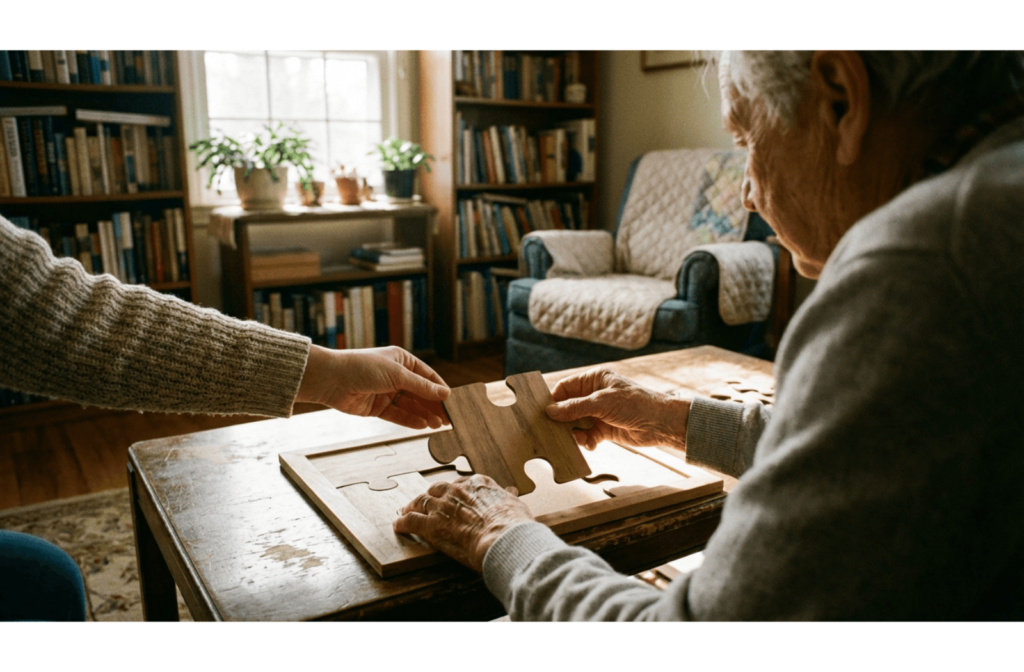
Memory care is a specialized approach within assisted living. It’s thoughtfully designed for individuals living with Alzheimer’s or other forms of dementia. This type of senior living looks at a person’s complete well-being, from creating a safe environment to promoting social connection.
A Focus on Cognitive Support
In memory care, you’ll find that daily life is structured to support cognitive function in a gentle, non-demanding way. Programs and activities are often adapted to each person’s abilities and interests. This approach helps provide daily routines filled with purpose, connection, and joy.
A Secure and Calming Environment
The physical layout of a memory care community is designed to be easy to navigate, which helps reduce confusion. You’ll find that these spaces are secure, allowing people to move around freely and safely. Colors, lighting, and decor are often chosen to create a soothing and comfortable atmosphere.
Specialized Staff and Programs
You’ll see that caregivers in a memory care community receive ongoing training to support individuals with memory loss. They learn communication techniques tailored to connect with each person. This support is centered on providing care with dignity and respect.
What Is The Role of a Nursing Home?
A nursing home, also known as a skilled nursing community, is set up to provide a high level of medical care. This option is a solution for individuals with complex health conditions that may affect their ability to perform certain activities of daily living and who need constant medical supervision from licensed professionals.
Support for Complex Medical Needs
You can expect these communities to be designed for individuals who require 24-hour medical attention. Services can include wound care, intravenous therapy, or the close monitoring of serious health issues. The setting is more clinical when compared to other senior living options.
Around-the-Clock Medical Supervision
In a nursing home, you’ll find that licensed nurses and other medical staff are always on site. Care is directed by physicians and follows a strict medical plan. The entire environment is structured to manage significant health challenges.
What Are The Key Differences of Memory Care & Nursing Homes?
The choice between memory care and a nursing home often comes down to one primary question. Does your loved one need more cognitive and lifestyle support, or do they need intensive medical care? Here is a simple breakdown of the distinctions.
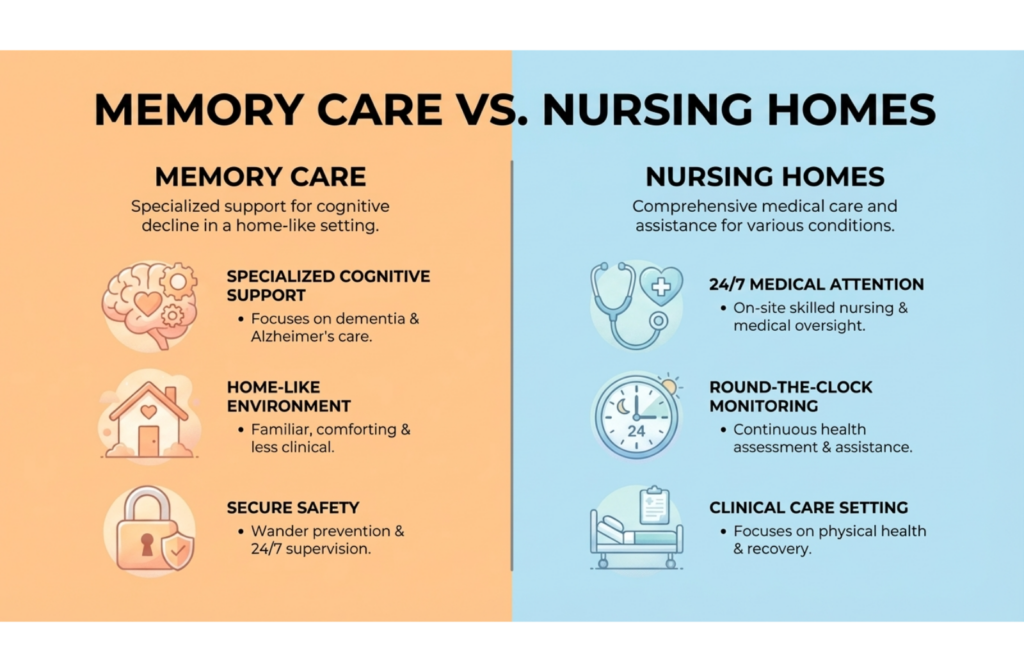
- Primary focus: Memory care centers on a supportive lifestyle for those with cognitive decline. A nursing home focuses on long-term medical treatment.
- Environment: Memory care communities have a residential, home-like feel designed for comfort and safety. A nursing home is typically structured more like a hospital.
- Staffing: Memory care teams have specialized training in dementia. Nursing home teams are made up of licensed medical professionals, such as registered nurses.
- Daily life: Activities in memory care are built around engagement and familiar routines. Daily life in a nursing home is structured around medical care and treatment schedules.
How to Choose the Right Senior Living Care
Understanding the difference between memory care and nursing homes can help you choose support that truly fits your loved one’s needs. Memory care is designed for individuals living with Alzheimer’s or other forms of dementia who benefit from structure, familiarity, and compassionate cognitive support. Nursing homes, on the other hand, focus on intensive medical care for those with complex health conditions requiring constant clinical oversight.
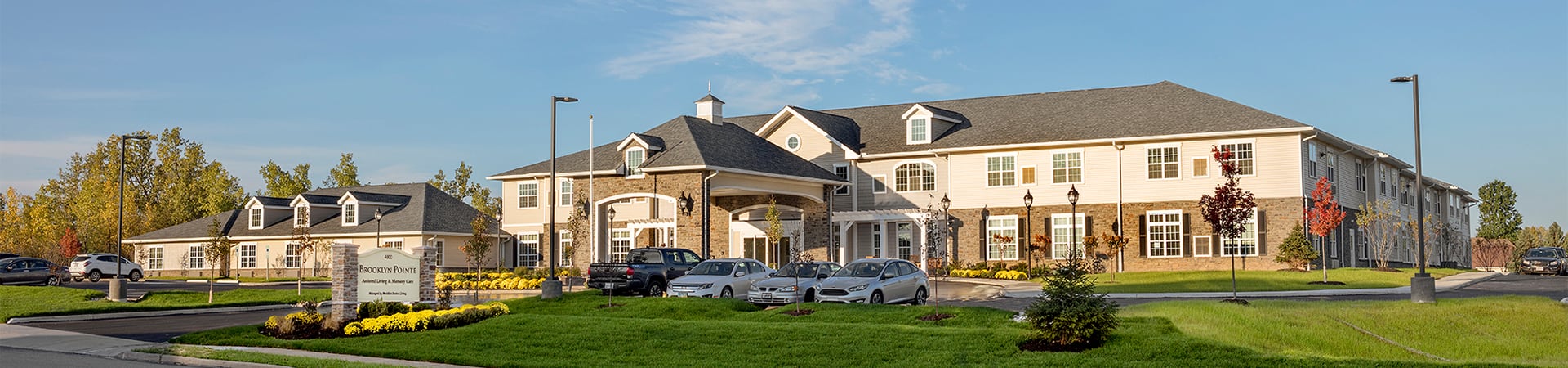
At Brooklyn Pointe Assisted Living & Memory Care, memory care is centered on creating a secure, welcoming setting where individuals feel supported without feeling overwhelmed. Thoughtfully designed neighborhoods, calming layouts, and structured daily routines help reduce confusion and promote comfort. Specially trained team members provide personalized support while encouraging meaningful connection through engagement and social interaction.
For families seeking a memory care environment that balances safety, comfort, and compassion, Brooklyn Pointe offers peace of mind and a strong sense of community. To learn more about how memory care here may support your loved one’s journey, schedule a tour and experience Brooklyn Pointe firsthand.


